While each lap of 2026 Formula 1 pre-season testing in Bahrain adds to the teams’ accumulated knowledge of how the cars will function when the racing begins, questions remain over how key elements of the spectacle will work, and how it will be communicated to fans, spectators and casual TV viewers.
Despite extensive briefings, drivers are still getting to grips with the complex demands of the power units which now have a near-50:50 split of electrical power and internal combustion engine output, requiring the batteries to be repeatedly discharged and recharged over a single lap. And there are still many uncertainties over the optimal way of managing this cycle across a race, whether drivers will be able to be flat out in qualifying, and even how to attack race starts given the greater amount of turbo lag.
Advertisement
One thread that is emerging is that while drivers will arguably have more of a role than before in car performance through the choices they make through the lap, software algorithms will ultimately determine the optimum deployment and harvesting points. So, to some extent, the driver’s role will simply be to do as cued – making it difficult for viewers to form an appreciation of skill.
Lewis Hamilton, Ferrari
“None of the fans will understand it, I think,” Lewis Hamilton told reporters after his first morning of testing Ferrari’s new SF-26 in Bahrain.
Advertisement
“It’s so complex, it’s ridiculously complex. I had seven meetings one day and they take us through it.
“I don’t know, it’s like we need a degree to fully understand it all.
“In terms of managing it, it’s pretty straightforward, I would say. Maybe in race trim, it’s going to be different, as you can see. But then there also is a system that can automatically, once you finish a lap, it learns the way that you’re driving.
Advertisement
“But, say, for example, you lock up and go wide, because it’s more distance, it affects that algorithm. So we’re just trying to get on top of it and understand it. But everyone’s in the same boat.”
This understanding process played out in real time during the first day of running in Bahrain, where teams are now focusing on performance after the five-day ‘shakedown’ week in Barcelona. There were clear differences between teams and drivers in terms of their approaches to various corners – even major variations with the same car and driver from lap to lap, as they evaluated the effects of braking versus lift-and-coast, and running higher revs in lower gears to turn the electric motors and generate power.
This comes at a cost of stability as cars shed downforce, particularly at the rear.
Advertisement
Lewis Hamilton, Ferrari
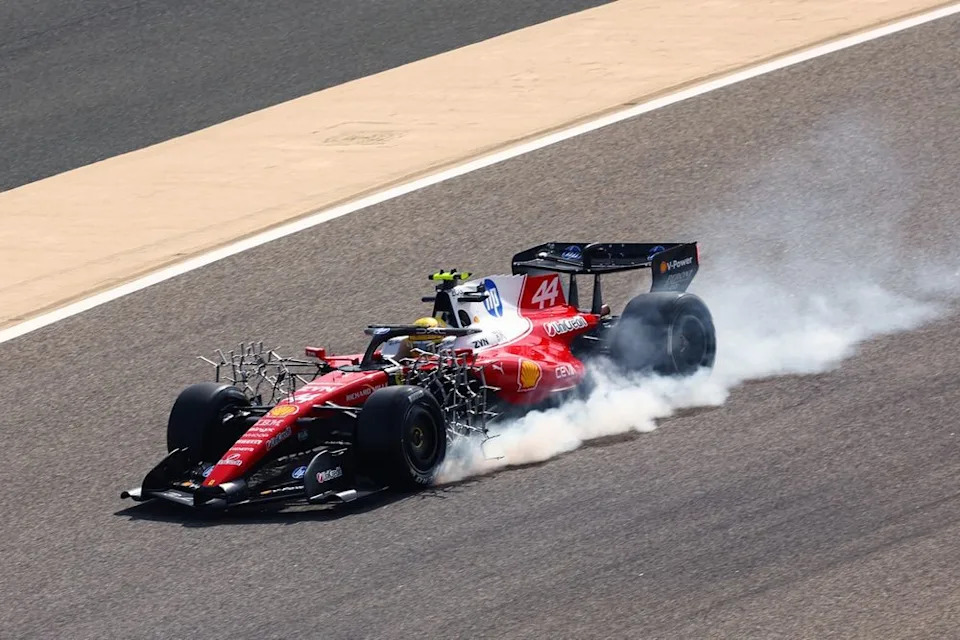
Lewis Hamilton, Ferrari
“The low gears that we have to go down to is just because we can’t recover enough entry power – because the car can’t manage,” said Hamilton.
“We can’t recover enough battery power, so that’s why we have to rev the engines very, very high. So, we’re going down to second and first, in some places, just to try to recover that extra bit of power.
“If you look at Barcelona, for example, [there was] about 600m lift-and-coast on a qualifying run. That’s not often the case.
Advertisement
“Here [Bahrain], we’re not able to do that, because there’s a braking zone, so that definitely doesn’t help, because the steps between those ratios are quite high. But also, it’s very low downforce.
“Yeah, there’s just a lot of sliding around.”
Read Also:

“A very difficult decision to make” – Lewis Hamilton reacts to Ferrari engineer change
To read more Motorsport.com articles visit our website.

We utilize the expertise of a group of diverse staff writers who help us cover an assortment of events, both locally and beyond, to keep our readers informed.
